BM-45
Spinocerebellar Tract - The Pathways of Balance and Coordination
Description
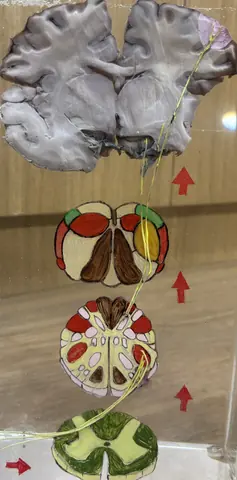
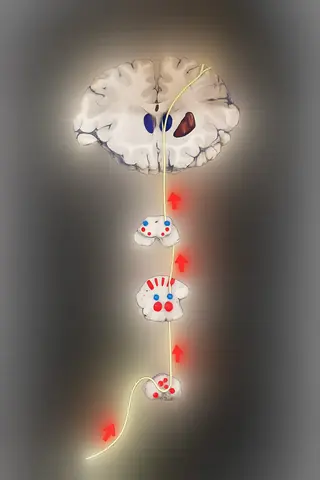
The spinocerebellar tracts convey unconscious proprioceptive information from muscles, tendons, and joints to the cerebellum, allowing continuous monitoring of limb position and movement. The dorsal spinocerebellar tract primarily carries information from the lower limbs and enters the cerebellum through the inferior cerebellar peduncle, whereas the ventral spinocerebellar tract conveys integrated spinal motor activity and enters through the superior cerebellar peduncle, crossing twice before terminating in the cerebellum. These pathways are essential for posture, muscle tone, balance and smooth, coordinated movements. Damage results in ipsilateral limb ataxia, gait instability, intention tremor, dysmetria and impaired coordination, even though muscle strength remains preserved.