BM-81
Cerebral Haemorrhage & Infarction
Description
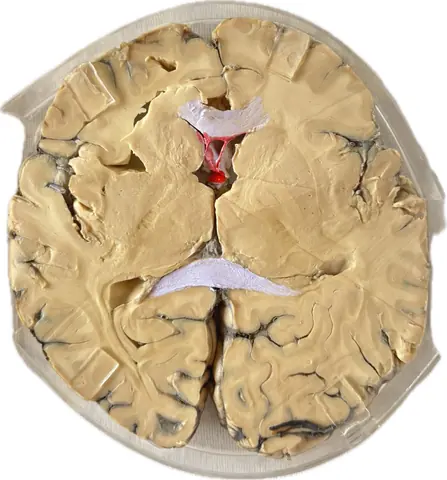
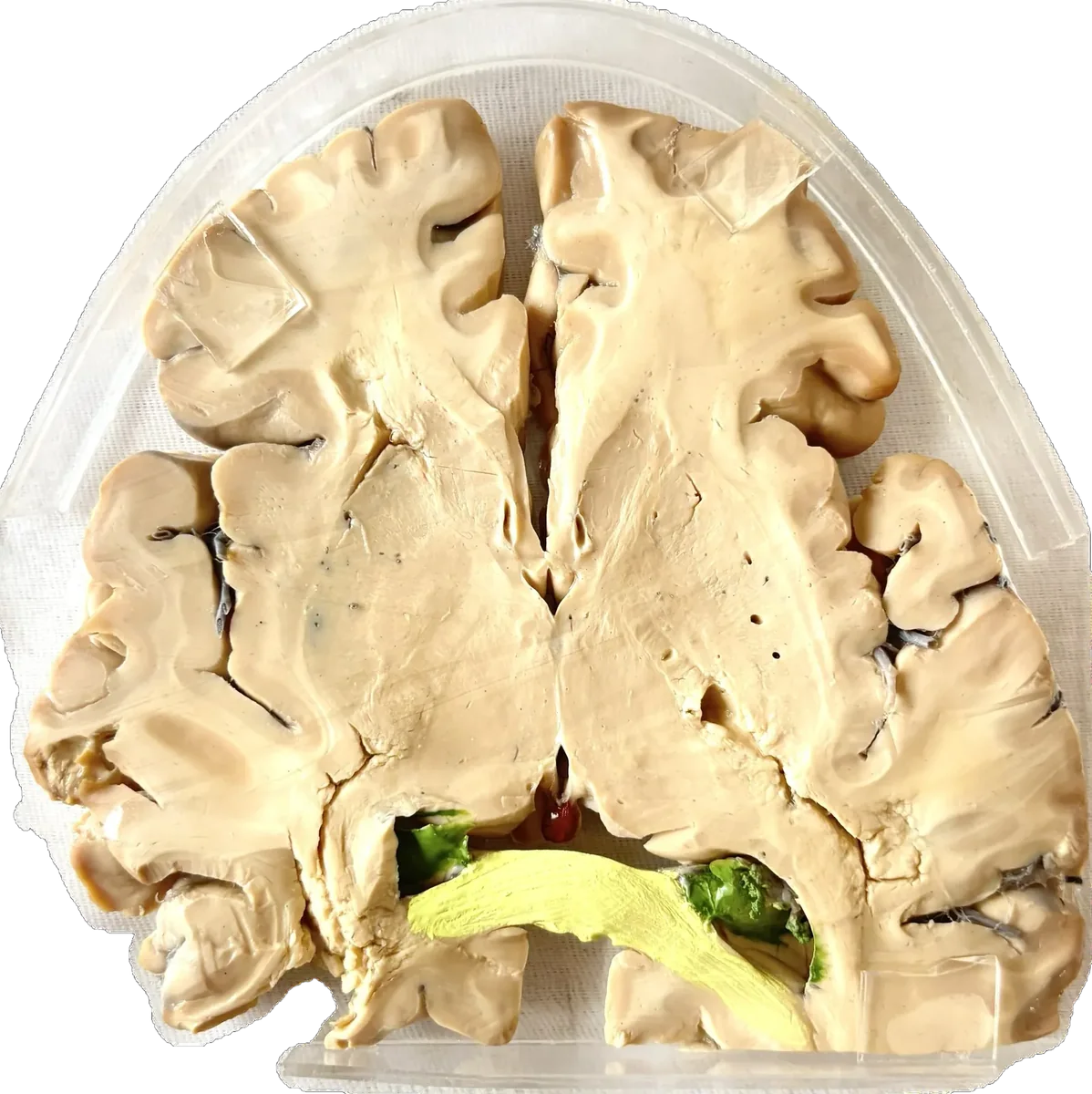
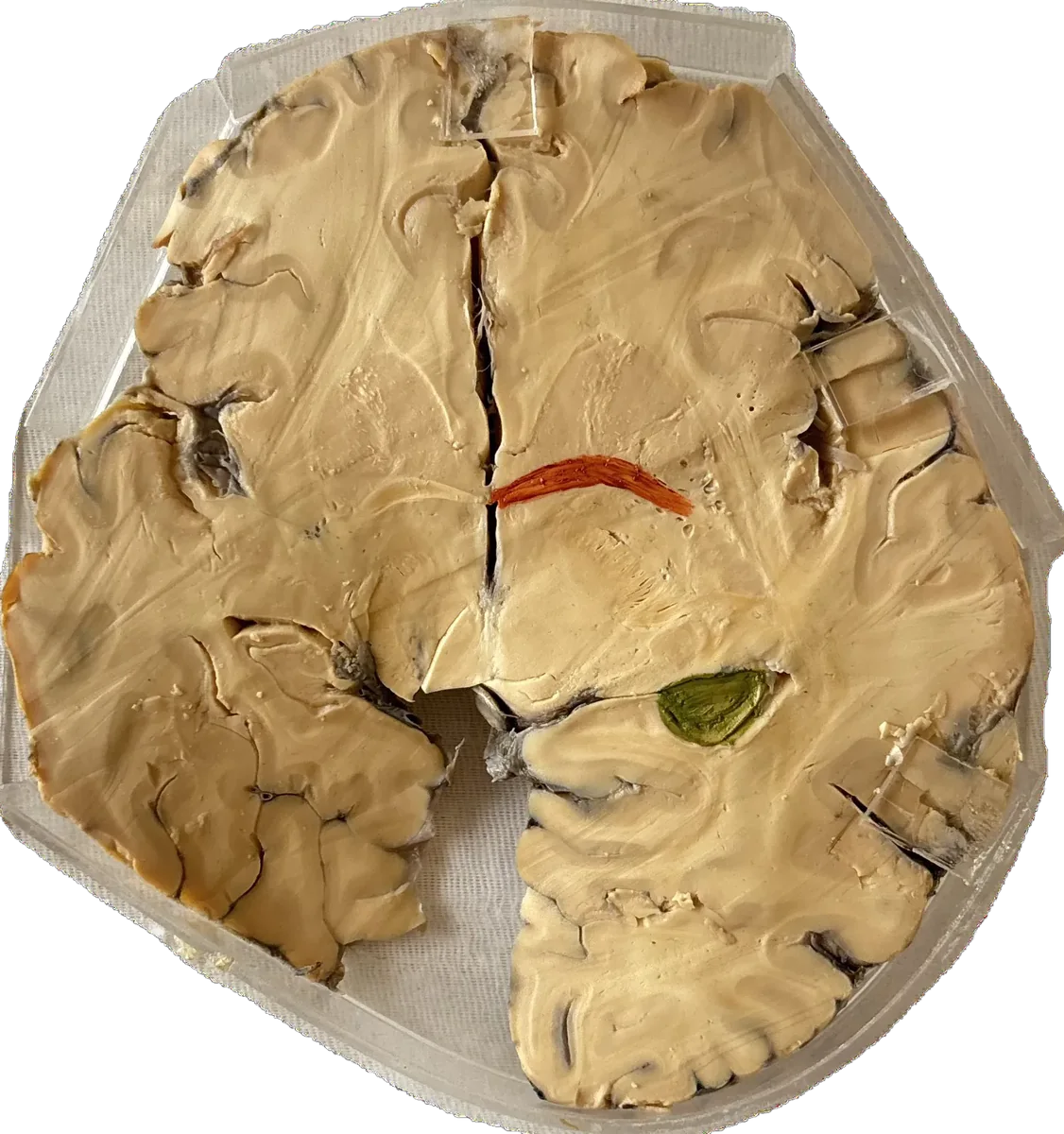
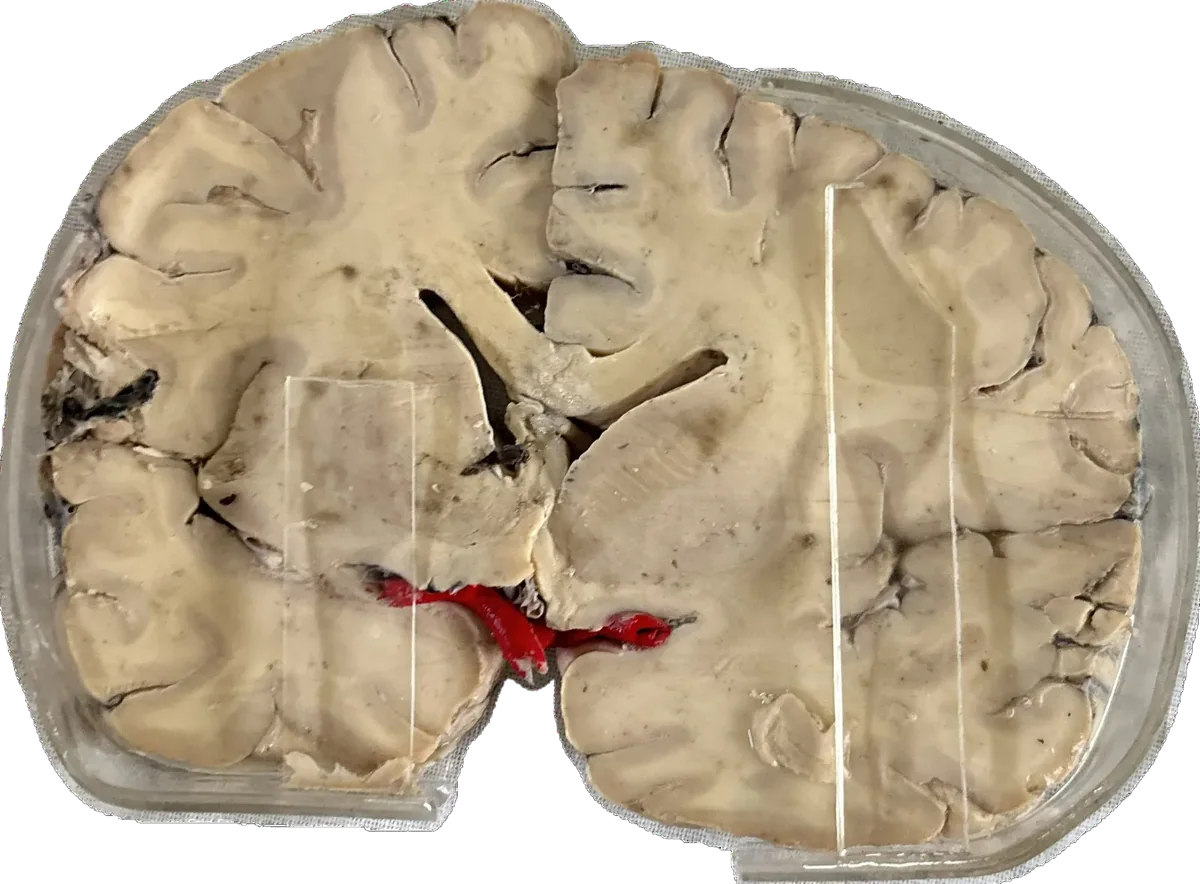
Cerebral haemorrhage results from rupture of intracranial blood vessels, allowing blood to accumulate within the brain parenchyma. Common causes include hypertension, vascular malformations, aneurysmal disease, cerebral amyloid angiopathy, coagulopathies and trauma. The resulting haematoma produces direct tissue destruction, surrounding oedema and raised intracranial pressure. Cerebral infarction occurs when interruption of cerebral blood flow causes ischaemia and irreversible tissue necrosis, most commonly following arterial thrombosis or embolism. With time, the affected brain undergoes liquefactive necrosis, eventually leaving a softened or cystic area with surrounding gliosis. Distinguishing spontaneous vascular disease from traumatic intracranial injury is important. Examination of the distribution of haemorrhage, vascular pathology, associated external/internal injuries and histopathological findings helps establish the underlying cause and mechanism of death.