BM-77
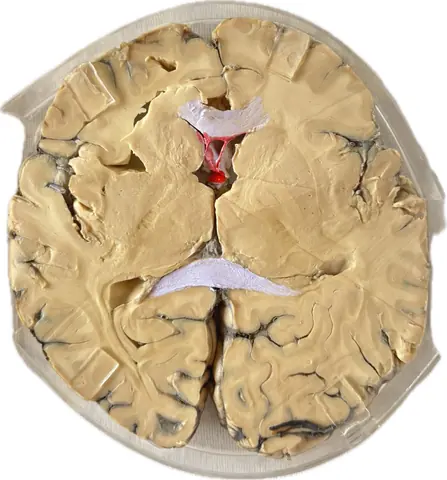
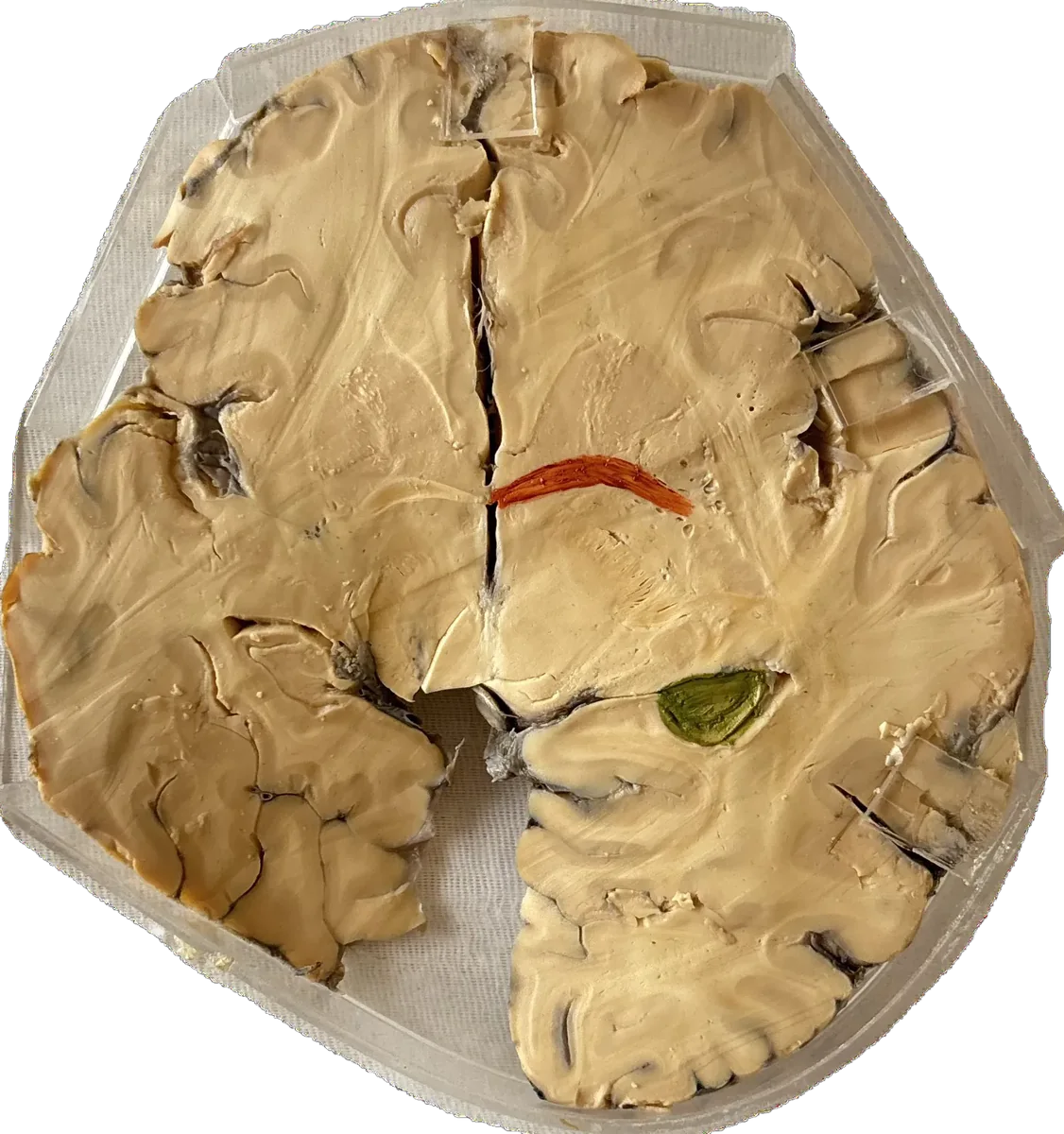
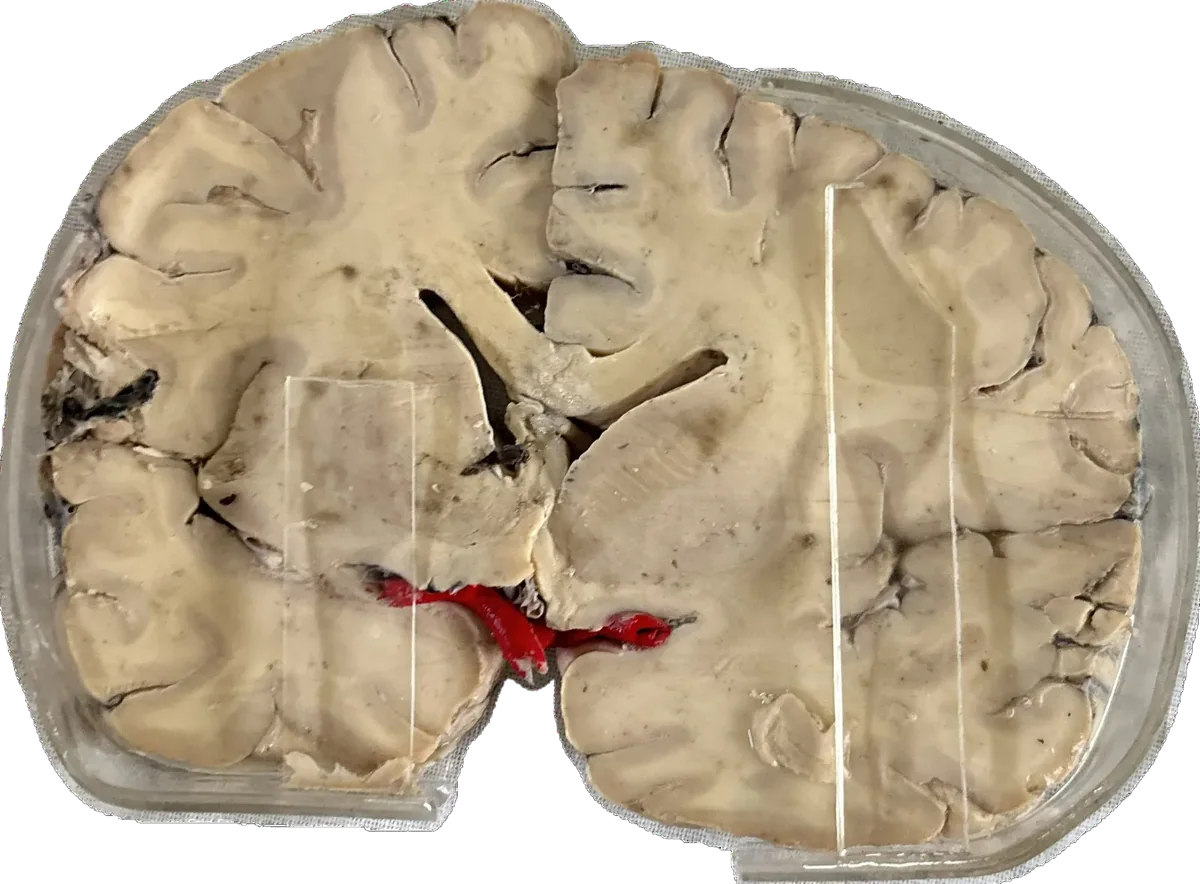
Transverse Section - Pineal Gland & Hippocampus
Description
The pineal gland is a small, pinecone-shaped endocrine organ situated in the epithalamus, between the two cerebral hemispheres, just above the superior colliculi. Despite measuring only 5–8 mm, it plays a vital role in regulating the body's circadian rhythm by secreting the hormone melatonin, predominantly during darkness. Often referred to as the "biological clock" of the body, melatonin synchronizes the sleep–wake cycle, seasonal rhythms and influences reproductive hormone activity. Physiological calcification of the pineal gland commonly occurs with advancing age and serves as an important radiological landmark on CT scans. Tumors arising from the pineal region may compress the superior colliculi, leading to Parinaud syndrome, characterized by impaired upward gaze, pupillary abnormalities, and convergence-retraction nystagmus. Though small in size, the pineal gland exerts a profound influence on sleep, hormonal balance, and the body's internal timing system.