BM-48
Subfalcial Herniation
CategoryNeuropathology & Neurodegeneration
LocationRack and row to be confirmed
Description
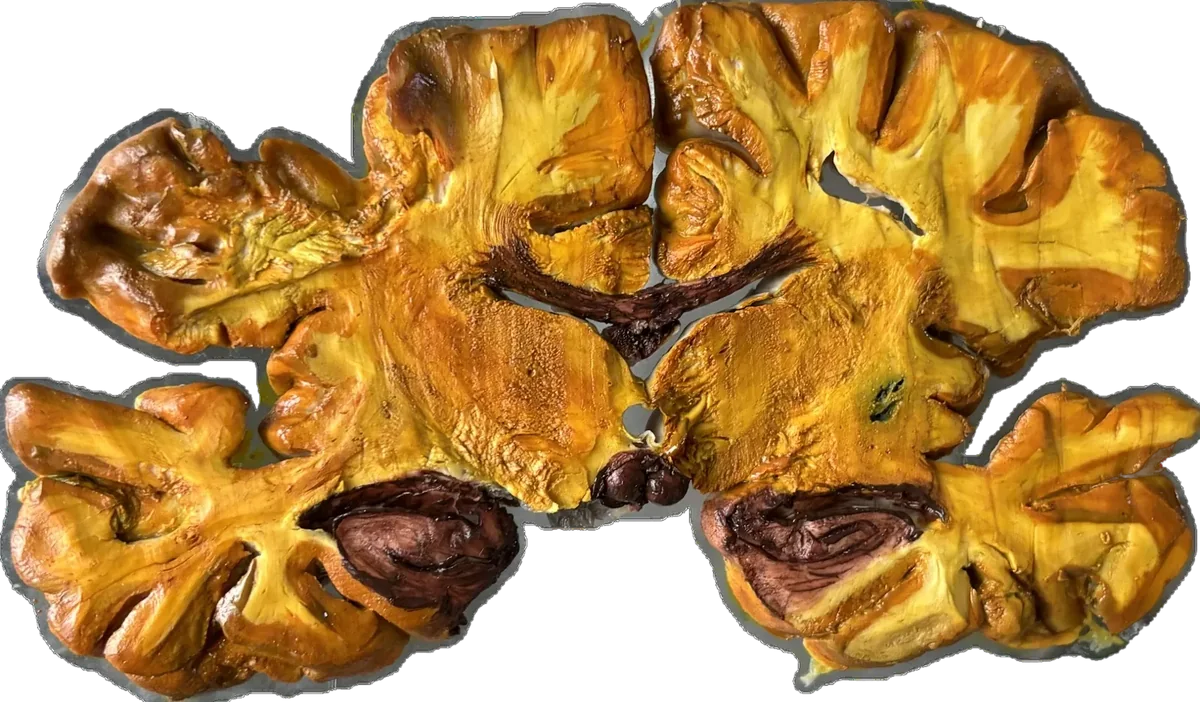
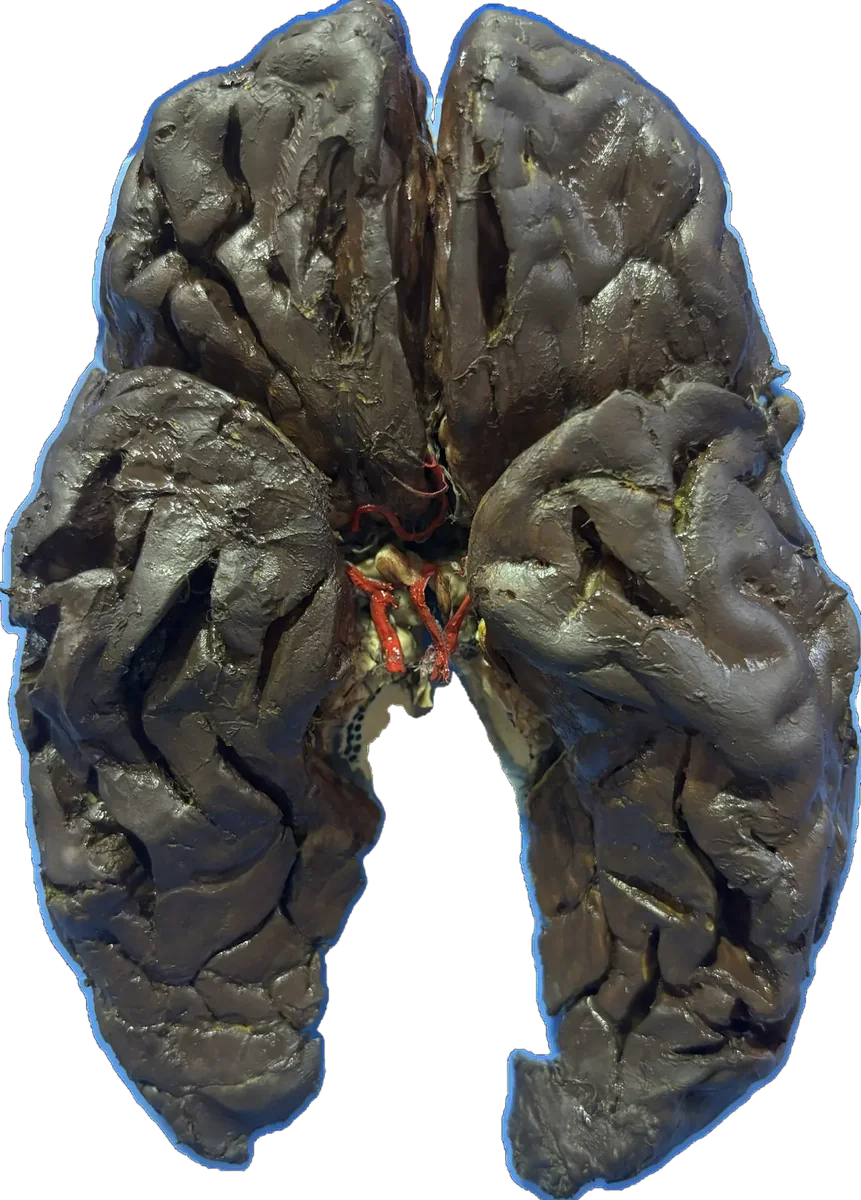
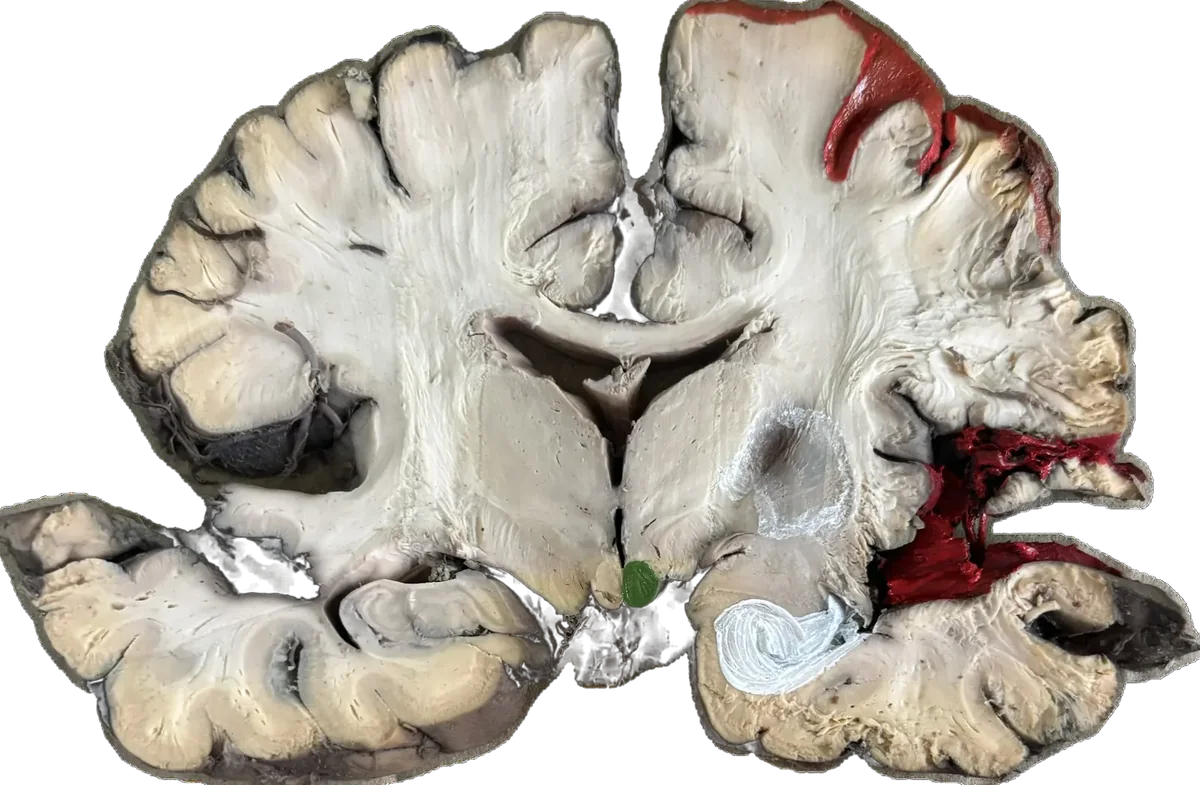
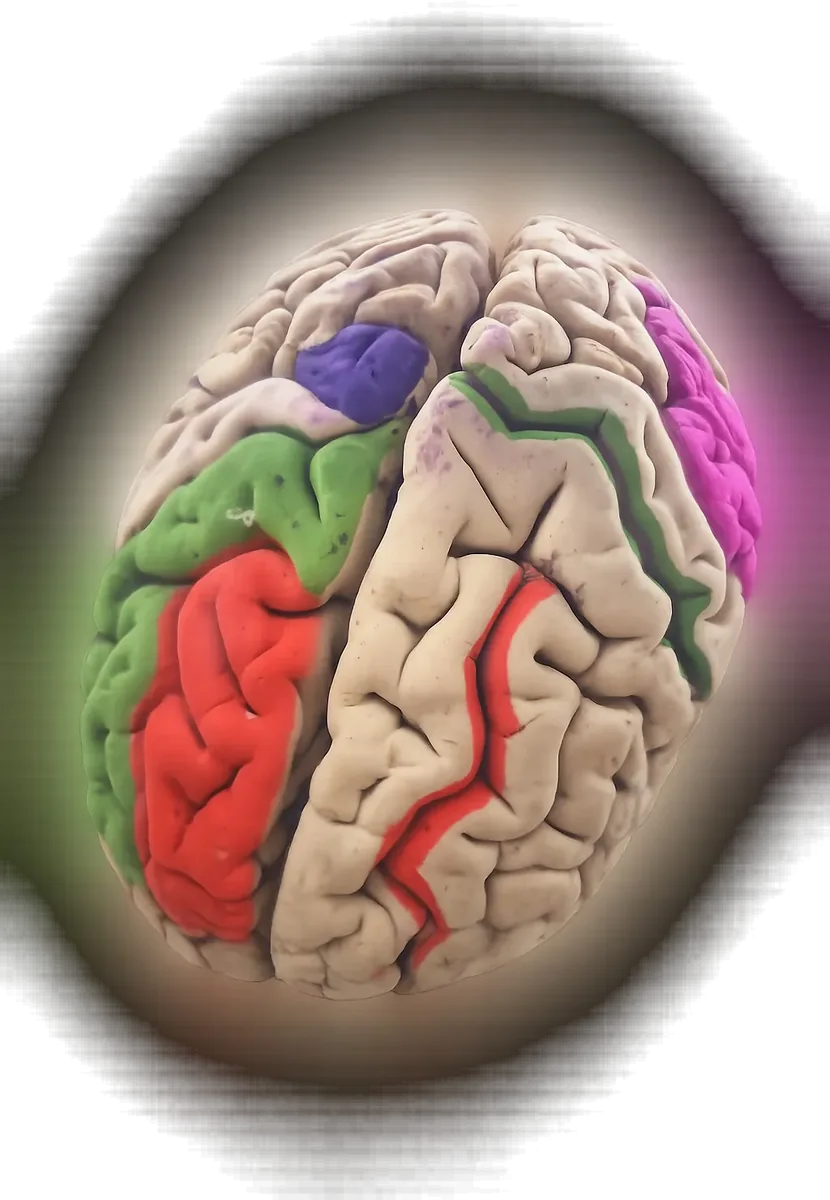
Subfalcine (cingulate) herniation occurs when raised intracranial pressure causes the cingulate gyrus to shift beneath the free edge of the falx cerebri toward the opposite cerebral hemisphere. It is commonly associated with cerebral edema, intracranial hemorrhage, tumors, or other space-occupying lesions. Compression of the anterior cerebral artery (ACA) may compromise blood supply to the medial frontal and parietal lobes, producing ischemia or infarction. Progressive displacement can contribute to further elevation of intracranial pressure and may evolve into more dangerous forms of herniation with brainstem compression and death.