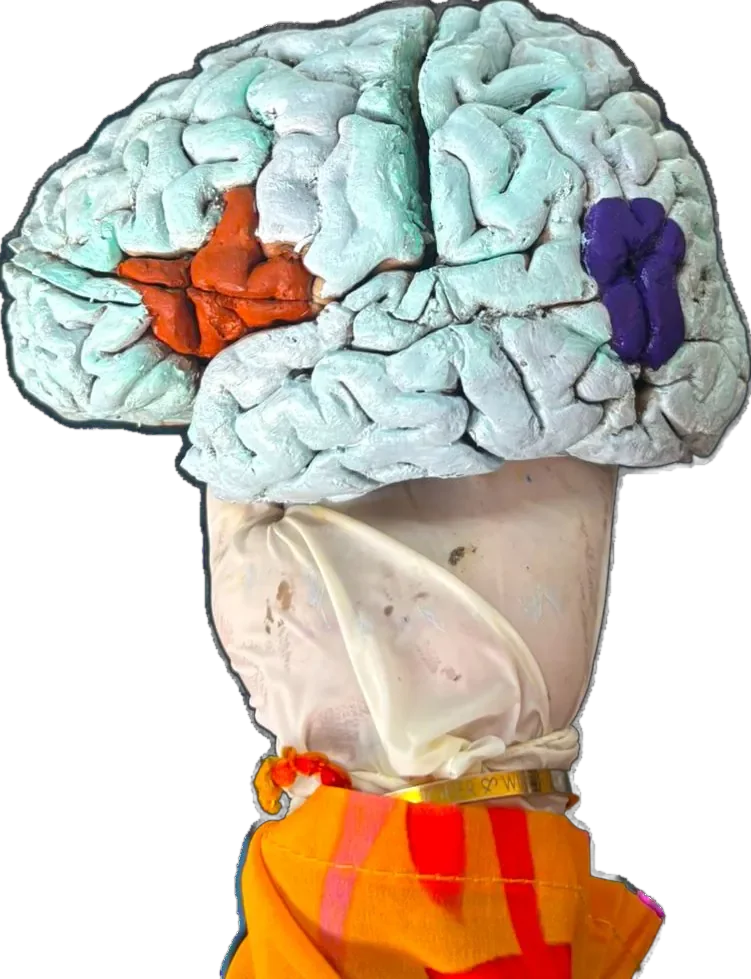
BM-15
T/S to show structures of basal ganglia
Description
The basal ganglia are a group of interconnected nuclei deep within the brain that primarily regulate motor control by acting as a gatekeeper for voluntary movements, and also play key roles in cognition, emotion, and reward. They are involved in a complex system of filtering and selecting motor signals, allowing desired movements to occur while inhibiting unwanted ones. Damage to the basal ganglia can lead to movement disorders like Parkinson's and Huntington's disease.
Key components include:
Striatum
The largest part of the basal ganglia, consisting of the caudate nucleus and putamen.
Caudate nucleus
Involved in various cognitive functions like learning and spatial memory.
Globus pallidus
The main output nucleus that sends inhibitory signals.
Subthalamic nucleus
Works with the globus pallidus to regulate movement.